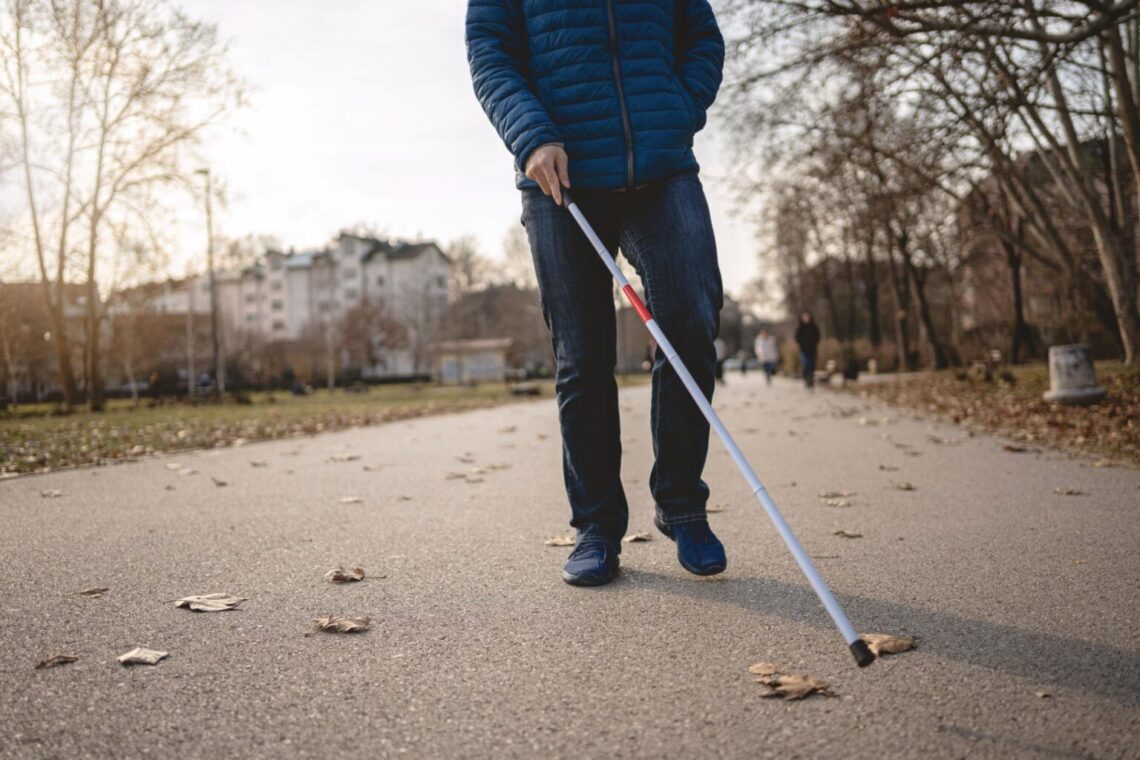
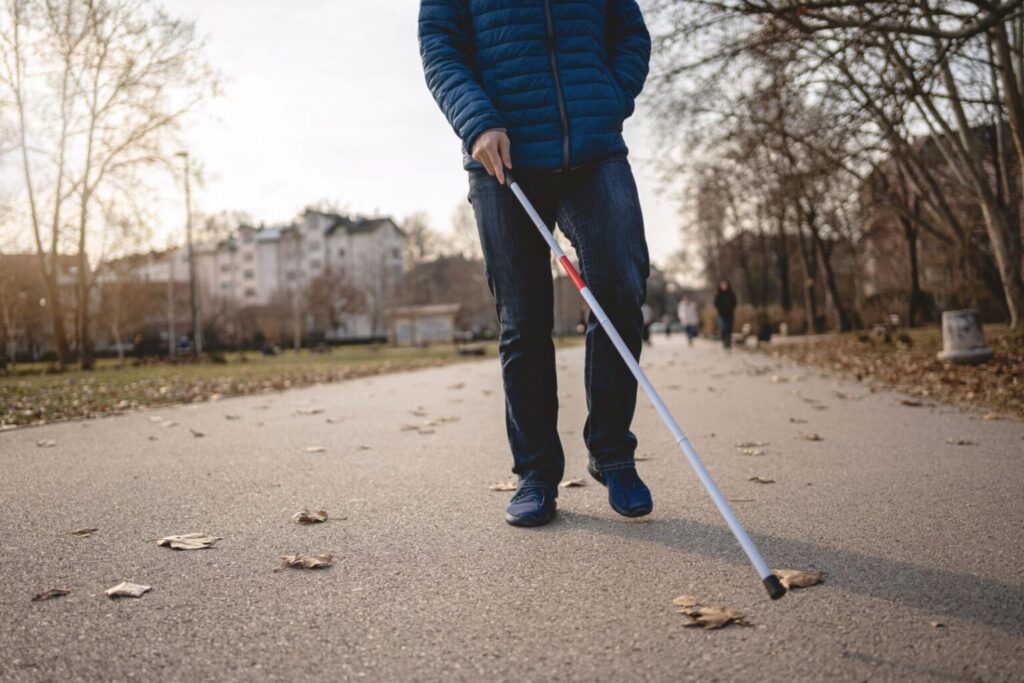
A visually impaired individual navigating daily life with independence and confidence.
Living Beyond What the Eyes Can See
What does a typical day look like for a visually impaired person?
For many, the assumption is limitation but the reality tells a different story. Life without sight is not a life without purpose, independence, or achievement. It is a life shaped by resilience, adaptation, and confidence.
A visually impaired person does not wait for the world to change they learn how to navigate it.
Morning Routine: Starting with Structure
Each day begins with routine and familiarity.
A talking alarm or smartphone voice assistant signals the start of the day. Personal spaces are well organized, allowing items to be located easily through memory and touch.
Daily activities such as dressing, preparing breakfast, and organizing personal belongings are carried out independently. Through consistency and practice, these routines become natural and efficient.
Mobility: Navigating the World with Confidence
Moving around without sight requires skill, awareness, and training not dependence.
Using a white cane or guide dog, a visually impaired person can detect obstacles, identify safe paths, and move through environments confidently. Sounds such as traffic, footsteps, and surrounding activity help build a mental map of the environment.
This challenges a common misconception:
Blindness does not mean helplessness it means navigating differently.
This video shows how a visually impaired person navigates daily life with confidence, independence, and skill.
Work and Productivity: Ability Without Limits
Visual impairment does not define a person’s potential.
With assistive technologies such as:
- Screen readers
- Voice commands
- Braille displays
individuals can study, work, and excel in a wide range of careers.
They serve as teachers, ICT professionals, entrepreneurs, and leaders demonstrating that ability is driven by skill, determination, and opportunity not sight.
Social Life: Meaningful Human Connection
Connection is not based on sight it is based on communication and presence.
Visually impaired individuals recognize people through voice, tone, and interaction. They actively participate in conversations, social activities, and community life.
In many cases, they develop deeper listening skills and stronger emotional awareness, allowing for more meaningful relationships.
Breaking Barriers: Changing Society’s Mindset
The greatest challenge is not visual impairment it is perception.
Society often underestimates the abilities of visually impaired individuals. These misconceptions can create more barriers than the disability itself.
When we shift our perspective, we begin to see:
- Strength instead of limitation
- Capability instead of dependency
- Potential instead of barriers
Conclusion: Redefining Ability
A day in the life of a visually impaired person teaches us a powerful truth:
Disability is not inability it is a different ability.
To be enabled differently is to adapt, innovate, and thrive in ways that challenge traditional thinking.
Call to Action
Let us build a more inclusive and understanding society:
- Support accessibility and assistive technologies
- Promote inclusive education and workplaces
- Treat every individual with dignity and respect
Because true vision is not in the eyes it is in understanding.





Good stories
Inabilty is not disability