By Margaret Akoth
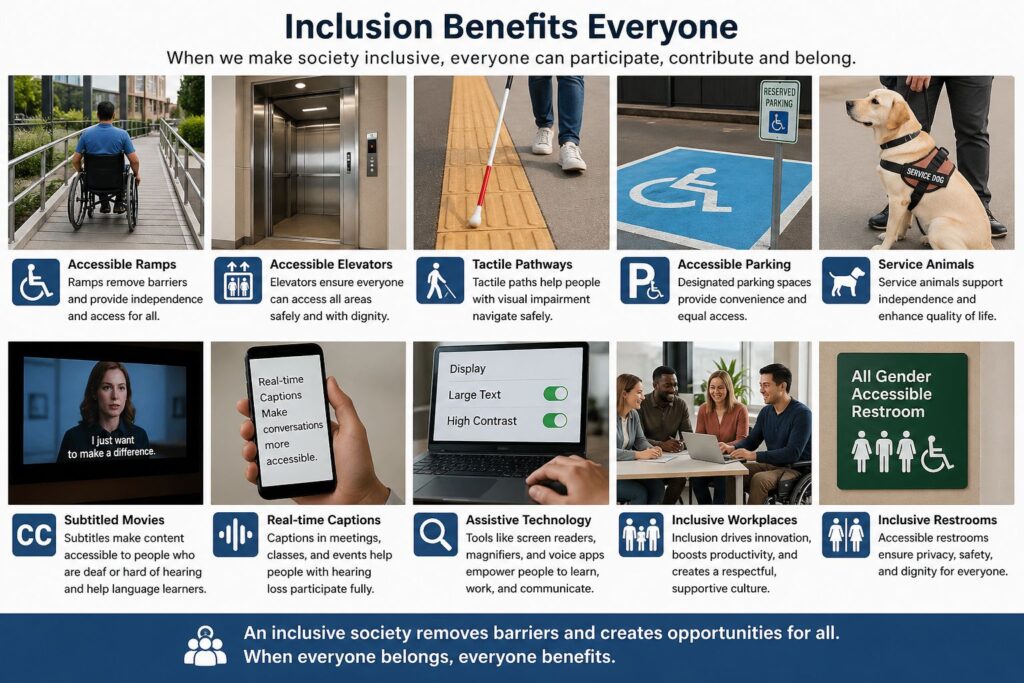
An AI generated image of inclusion benefits for people with disability in the society
Disability inclusion helps society as a whole by establishing conditions where everyone may engage, contribute, and flourish. Although they are frequently created with individuals with disabilities in mind, accessibility features like wheelchair ramps, tactile pavement, subtitled movies, and flexible workspaces enhance experiences for all members of society. For example, captioned videos aid language learners, commuters in loud surroundings, and those who want to read along while watching information in addition to those with hearing problems (World Health Organization, 2023). In the same way, ramps and automated doors improve building accessibility for wheelchair users as well as parents using strollers, senior citizens with mobility issues, and delivery workers moving bulky items.
The concept of inclusive design is not limited to physical areas. Employees with chronic diseases, caregivers, or those with mobility issues are supported by flexible work rules, such as remote work choices or changeable hours. These strategies increase output, lower absenteeism, and foster general well-being, proving that inclusion is not just a moral need but also a useful benefit for both communities and enterprises. Digital accessibility is also highly important. Websites that can be quickly adjusted for contrast and text size, or that can be navigated by screen readers, benefit users with visual impairments and enhance usability for all users, including those with temporary injuries and older individuals.
Rethinking ability in society may be achieved by embracing accessibility. Communities that value inclusion foster fair participation, empathy, and teamwork. Workplaces that use universal design principles, schools that use inclusive teaching methods, and public areas with accessible amenities and clear signs all contribute to a society that is more supportive and cohesive. Essentially, we all gain when we build with the most vulnerable of us in mind.
In the end, redefining ability results in a fairer and more inclusive society where everyone has access to opportunities and obstacles are eliminated. By making inclusion a top priority, we foster cultures that celebrate difference, encourage participation, and fortify social and economic ties. See this short film about inclusive workplaces https://www.youtube.com/results?search_query=inclusive+design and this infographic on universal design principles https://www.who.in for a visual example.