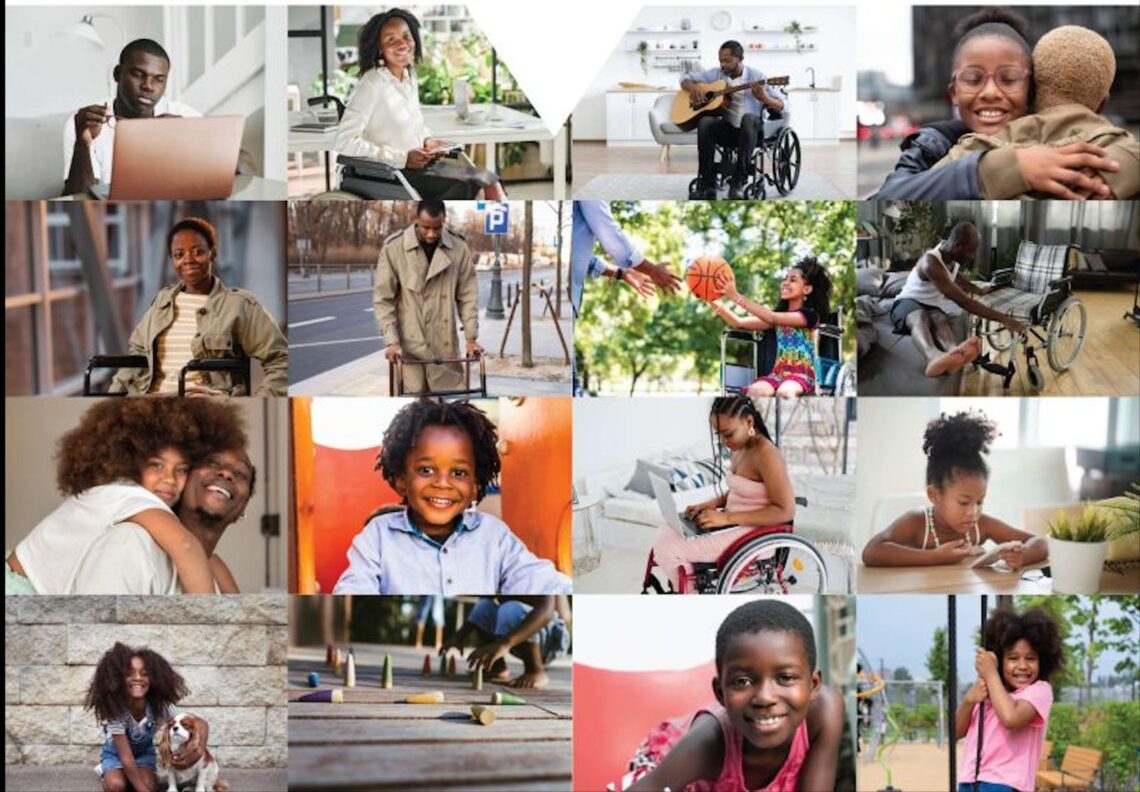
What comes to mind when you think about disability? For many people, their first impressions are shaped by what they see on TV, in films, or on social media. The media has a powerful influence on how society perceives disability sometimes it empowers, but just as often, it reinforces long-standing stereotypes and misunderstandings.
For many years, mainstream media has depicted disability in a narrow light. Films and news features have frequently leaned on themes of “tragedy” or “inspiration,” while rarely portraying the everyday realities of persons with disabilities. While such stories may be emotionally compelling, they often reduce individuals to their challenges or frame ordinary achievements as extraordinary simply because of disability. In her online article, Mwangi (2024) notes that media in Kenya has the potential to reshape these narratives and challenge stigma.
This kind of storytelling often referred to as “inspiration porn” was strongly criticised by disability activist Stella Young. She argued that persons with disabilities are too often portrayed as tools to inspire able-bodied audiences, rather than as complex individuals with their own ambitions, identities, and full lives.
However, there are signs of progress. The rise of social media and digital platforms has enabled persons with disabilities to tell their own stories, on their own terms. Influencers, bloggers, and creatives are challenging stereotypes and redefining what it means to live with a disability. These voices are pushing for more authentic representation stories that reflect both the realities and the richness of disabled lives, beyond pity or heroism.
Kenyan media has also begun to make shifts towards more accurate and empowering portrayals (Kenya Disability Network, 2024). Yet, a critical gap remains one that goes beyond how disability is portrayed to who gets to tell the story.
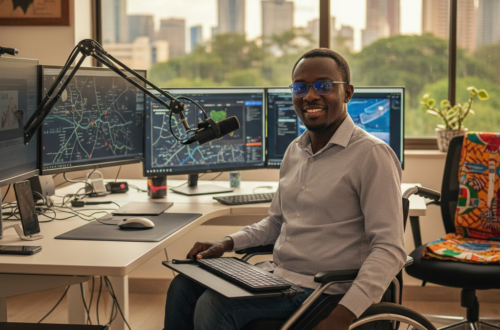
It is one thing to talk about persons with disabilities in the media, and quite another to see them inthe media. While sign language interpreters have become a familiar presence during prime news broadcasts, their visibility does not necessarily translate into inclusion. How often do we see persons with disabilities employed on our screens as presenters, reporters, or producers?
Media outlets play a crucial role in shaping public opinion and influencing policy. The narratives they promote affect everything from inclusive education to workplace accessibility. Meaningful representation, therefore, is not just about visibility it is about participation, authenticity, and equity.
Kenyan news outlets have increasingly adopted more accurate and empowering representations of disability – Kenya Disability Network, 2024


I see it as nothing big cause i am just abled differently from others and that really makes me proud.
Additional to that I can do something that alot of people can’t do such as writing with my legs,feeding myself with my legs ,dressing myself with my legs etc .
Great read. It really shows how powerful media is in shaping how people see disability. I like the focus on changing the narrative to something more real and respectful ,representation truly matters. Thanks for sharing this perspective!
Good stuff. A great message to the world.
A great read. Your writing is both informative and thought-provoking. It really highlights an important issue in a clear and powerful way.
This made me realise how quietly the media shapes the way we see people without us ever noticing. Great message.
Great read
A great topic in deed.Disability is not inability. Kenya Institute of Mass communication has for the last Five years been admitting trainee who are enabled differently thus empowering the trainees to seek jobs in Mainstream media house. If a media house employs such people it a great step towards inclusivity of such people.
A very insightful piece. I love how it highlights the powerful role media plays in shaping perceptions of disability and the importance of moving toward more authentic and inclusive representation.
Very informative. Media has been the lens that mirror what happens in the society. I believe more can still be done to highlight human interest stories, especially the positives impact people of disability have in the community.
The society as whole, Media industry being integral part of it can significantly change public perceptions by either reinforcing stereotypes or promoting a more inclusive and realistic view of disabilities.
Inclusivity: creating environments where all individuals are welcomed, valued and respected, regardless of their differences.
this can be achieved by working to remove barriers and providing equal opportunities in all spheres of life e.g., education, trainings, employment, sports.
Theres public’s interest stories in here.