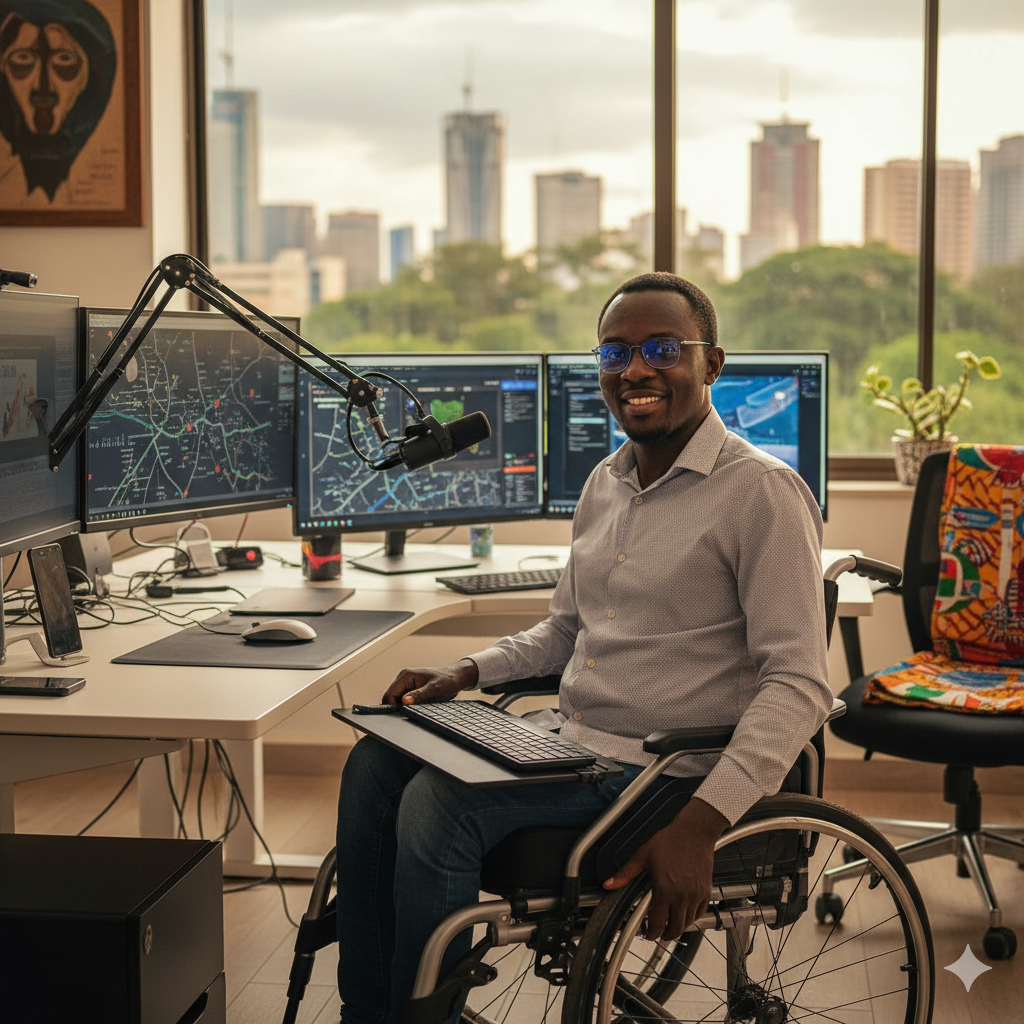
David, who prefers to remain anonymous, was invited to speak at a tech hub one day in Westlands. Up until a year ago, he would have agonised over how he was going to get his wheelchair into the building. This time, he sent the event organizers an “accessibility guide” he had put together, including a detailed video of the accessible ramp he had made. When he arrived at the building, the staff were waiting for him. They didn’t see a man “struggling” to get in; they saw a “workaround” to his entry.
On stage, David didn’t speak of “overcoming” his disability. He talked about designing his way around. “Ability often simply means that the design suits you,” David said. “In Nairobi, the streets are not designed for my wheels, but my career is designed for my brain. I didn’t lose the ability to compete; I just changed the playing field so that I have the advantage.”
David realised that ability isn’t about adapting to the world. It’s about creating one where your unique mode of mobility is a strength and not a weakness. He wasn’t just a man in a wheelchair; he was his own hero, and he showed us that in a city of millions, the best tool you can have is the one you create.