Opinion
In today’s world, the conversation around disability is changing but not fast enough. While policy frameworks and advocacy efforts have made progress, societal attitudes and media narratives still lag behind to some extent. It is time to confront the bitter truth: the biggest barrier facing persons with disabilities is not their condition, but how society chooses and prefer to see them.
In Kenya, the constitution is very clear. Every Kenyan is entitled to dignity, equality, and freedom from discrimination. Yet, for many differently abled individuals, these rights remains practical and in some parts theoretical, from inaccessible buildings to limited employment opportunities, exclusion is still part of daily life. But perhaps the most subtle and incredible form of exclusion lies in storytelling.
The Challenge is “How We Tell the Story” Media in Kenya has often framed disability in two extremes: tragedy or triumph. On one hand, stories portray individuals as helpless victims in need of sympathy. On the other, they are cast as extraordinary heroes who have “overcome” their condition.
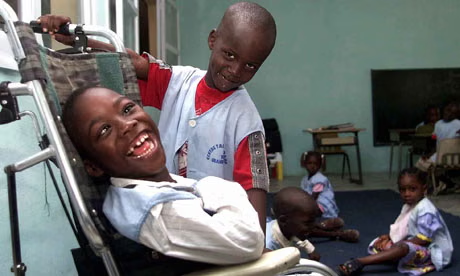
A disabled child and his classmate in Dakar, Senegal. Across the globe, disabled children are less likely to attend school. Photograph: Seyllou/AFP/Getty Images
This is where as media practioners, responsibility becomes critical. As Herbert Zettl argues, media aesthetics is not neutral but rather shapes how audiences feel and think. Dramatic music, selective framing, and exaggerated storytelling can distort reality, even when intentions are good
Meanwhile from sympathy to equality, rights-based approach demands a different perspective. Global frameworks like the Convention on the Rights of Persons with Disabilities emphasize that disability is not a personal failure it is a societal responsibility. Barriers in infrastructure, education, and employment are what truly “disable” individuals.
In Kenya, institutions such as the National Council for Persons with Disabilities have long advocated for inclusion. But policy itself cannot transform society instead attitudes must change, and media has a central role to play in that transformation. We must move from stories that seek sympathy to stories that demand equality. Why This Matters Now
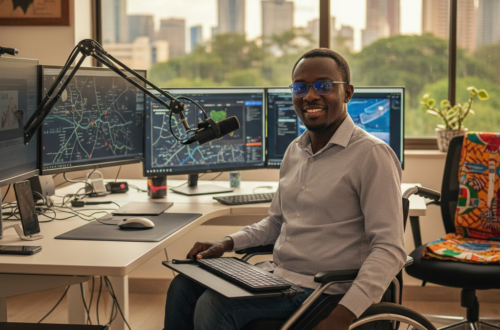
Kenya is experiencing rapid digital and social transformation. With the rise of digital broadcasting, social media, and youth-driven content, narratives are spreading faster and wider than ever before. This presents both a risk and an opportunity. The risk part is that outdated stereotypes will simply be repackaged in high-definition. The opportunity is that new, authentic voices can finally be heard. Young content creators, journalists, and filmmakers now have the tools to reshape the narrative to show persons with disabilities as students, professionals, leaders, and innovators, not as exceptions, but as part of everyday life.
Redefining ability is not about changing terminology it is about changing mindset. It requires:
Media houses to adopt ethical and inclusive storytelling practices meanwhile Journalists to prioritize accuracy over emotion-driven narratives and Policymakers to enforce existing laws more effectively
Society to recognize ability in all its diverse forms and most importantly, it requires listening to the voices of persons with disabilities themselves.
In Conclusion, The phrase “abled differently” is more than a label, it is a challenge to rethink what ability truly means. As long as society continues to define people by their limitations, exclusion will persist. But when we begin to recognize capability, dignity, and potential, we move closer to a truly inclusive nation.
Kenya does not need more stories of pity or praise. It needs stories of truth. And action more so, perhaps, that is where real change begins.
The phrase “abled differently” is more than a label, it is a challenge to rethink what ability truly means. As long as society continues to define people by their limitations, exclusion will persist. But when we begin to recognize capability, dignity, and potential, we move closer to a truly inclusive nation.