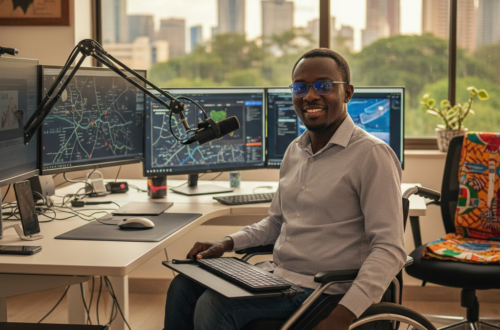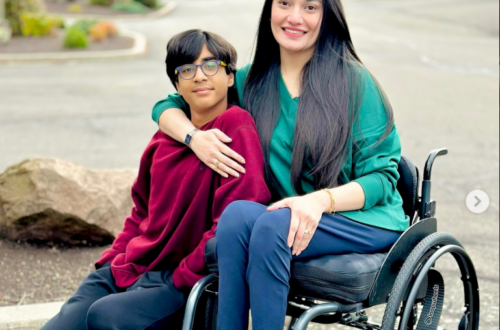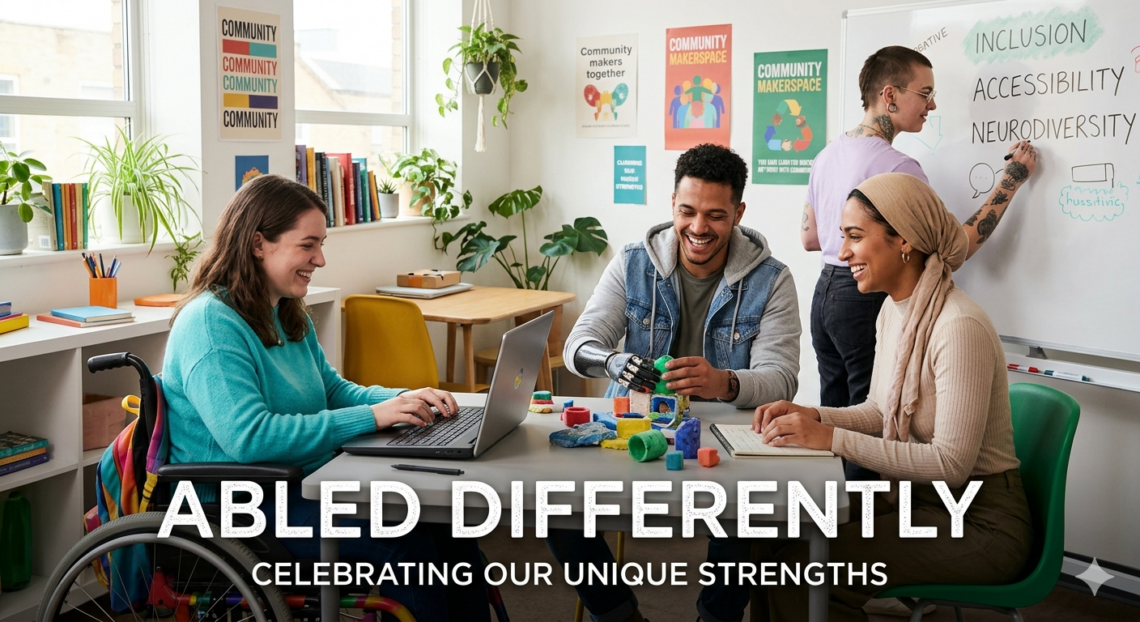

Image generated by Gemini 3 Flash by Stella Nana
Over an extended period of time, the discourse on disability and neurodivergence has been put to a medical discourse an emphasis on the broken, the broken needs to be fixed, or what is not there to what is perceived as the norm.
But we are going through a quiet revolution. We are shifting the language. We are altering the attitude.
We are leaving the constraining phrase disabled to the much more true, powerful, and affirming human condition: Abled Differently.
The term Abled Differently does not imply that one should overlook the reality of the impediments that individuals with disabilities face. It is not the toxic positivity that is part of the accessibility, accommodation, or support that is necessary.
Rather, Abled Differently is a prism that identifies natural strengths, alternative adaptive solutions, and different points of view.
When we perceive someone as disabled, what comes to mind is his or her lack (e.g., they are unable to walk, they are unable to hear, their sensory information is overloaded). We define them by a void. Yes, they may experience the world differently, but they are unique.
Many neurodivergent people are hyper-focused, they are creative in problem-solving, have deep empathy, and resilience.
What makes the Abled Differently mentality really strong is that it not only changes the emphasis of assimilation to actual inclusion. It questions the notion that all people have to conform to one, limited definition of what can be referred to as ability.
Rather, it poses the question: What are the strengths of this particular wiring or experience, and how can we establish an environment in which the strengths nourish?
By accepting differently-abled persons, we allow different perspectives and thoughts to flow through. This leads to business, art, technology, and community design innovation. It creates adaptive products (such as text-to-speech or curb cuts) that ultimately become beneficial to everyone.
Whether it is the next time you encounter someone who socializes differently, moves differently in a physical space, or understands information in a different manner, do not give in to the temptation to view them as limited in some way.
Ask yourself: What is their superpower? What can they possibly be enabled to do differently to bring their contributions to the beautiful, complex mosaic of our common human experience?
The world is no unity of talent. It is a range of individual competencies. Let’s start celebrating it.
Google. (2026). Abled differently: Shifting the paradigm from disability to unique ability [Large language model].”https://gemini.google.com“